Showing posts with label Pet Peeve. Show all posts

Friday, February 23, 2018

"I Could Care Less" and Other Pet Peeves


     I've talked about pet peeves of mine before, little grammar flubs and spelling flaws that send my inner editor into convulsive fits.  Well here are five more, comin' atchya hot, and I'll get those engines revving by starting with the most powerful and descending in random order therefrom!


1.  So didn't/So Can't I

     This first started bothering me in the fifth grade.  And when I say bothering, I mean annoying the piss out of me holy shit.  When the students did it, it was one thing; we were nine, ten, eleven at most.  Mistakes are to be expected from children.

     But the teacher.  Oh, woe be unto her, though blessed she be, because good lord when I heard the phrase "So didn't she" come out of her mouth during a lesson on Native American life, I wan.ted. to. puke.  And when I say puke, I mean projectile vomit on the entire class.

     This peeve is not my pet, it is the bane of my existence, it is the skunk living under my porch that eats all my cats' food and every once in a while decides to spritz down my dogs, and I hate it.

     If the phrase were used in proper context, it wouldn't be so bad.  If someone said, for instance, "I didn't like the movie," and someone agreed with, "So didn't I," that would be fine.  A creative, realistic piece of dialogue.

     But the way people use it is always as a form of capable agreement.  "I can paint a picture," "So can't I!"  "I went to the Hawaii over the summer" "So didn't I!"  "I'll go to the store tomorrow," "So won't I."

     iT MAKES NO SENSE!  It's ridiculous, it's preposterous, I expect grammar fuckups from students, but something this severe from my teachers, my god--and on multiple occasions, not just a one-time thing, and never a correction, never once a student saying something, as if everyone else was blind to the blatant abuse of the English language occurring before our very ears!

    Please, for the love of all that is holy, do not use the phrase "So don't" to mean "So do."  They are antonyms.  ANTONYMS!


2.  I Could Care Less

    Okay, now that we've got some of my crazy out of the way; I could care less.  A phrase meant to convey how little one cares about the given situation.

     But it makes no goddamn sense.

     Because the actual phrase is "I couldn't care less."  It's meant to indicate that no fucks are left to be given.  You wouldn't say, "I could give a fuck," you say, "I couldn't give a fuck."  Saying you could care less indicates that you do care, because there's still less care in the world for you to feel, some cares left to give away.

     Unless that's what you mean, when you say "I could care less," you're fucking up, plain and simple.  If your character doesn't care at all, or wants to seem like they don't care at all, they want to say there are no fucks left in the bank.


3.   Affect/Effect

     So I had trouble with these for a very long time myself.  It's a difficult balance between the two, and grammatic education is going down the tubes, so a lot of people are in the same boat as me.

     The way I finally figured out how to differentiate between the two was essentially this;  Affect is a Verb, and Effect is a Noun.  See below:

     "The effects of the storm were horrible."

     "We were horribly affected by the storm."

     Next time you need to use one of these bad boys, take a second to ask yourself if the word you need is a verb or a noun--are you being Affected by it, or are you observing the Effects?


4.  Whining/Whinging

     So this one is included as a fuck you to yours truly, because for a long time I thought "whinging" was just people misspelling "whining" and it really pissed me off.  But it turns out "whinging" is a real word, meaning "To complain in an annoying way."  So it's basically the same thing as whining.

     It's very British (so British that my current spellcheck reads it as a misspelling of whining), which is why I never realized it was a real word.  I should make my peace with it.  It's a real word.  It's a valid word.

     But God do I hate it. 
(you don't have to tho)


5.  Peek vs. Peak

     Okay, just one more, not a pet peeve so much as just a word of warning.  A peak is the top of a mountain; a peek is something you do in people's windows.

     So it's pretty much like the affect/effect thing; if you want a verb, it's peek, and if you want the noun, it's peak.


     Happy writing all!

Wednesday, February 1, 2017

3 Common Near-Homophone Mix-ups


     Homophones!  From "Homo," meaning "Same," and "Phone," relating to sound.  Thus, Homophones are words that sound the same--the three they're/there/theirs of the apocalypse, for example.

     So what is a near Homophone?  It's those pesky words that sound or are spelled alike, but are not the same, and do not have the same meaning--this is sometimes just a misspelling, but more often arises because someone has confused or conflated the meaning of two very different words.

     These are a few of the most common mistakes I see, and what the correct usage is for each.

1.  Wreck Vs. Wreak

     I see this a lot in fanfiction, particularly with the phrase "____ Havoc."   This one bothers me a lot--not for any particular reason.  It's just one of those things that gets under my skin; a pet peeve.  So here I am to set the record straight!  Is is Wreak Havoc or Wreck Havoc?

Short Answer:  It's Wreak Havoc.

Long Answer:  Wreak is a verb which means "to inflict," whereas the verb form of Wreck means "to destroy."  What this means for us is that when you wreak havoc, you are inflicting it on others, but if you were to wreck havoc, you would be destroying havoc itself, which is a much more heroic deed than is typically meant.


2.  Leer vs. Leery

     This one I've included primarily because it confused me for a long time.  "What the fuck," I kept saying to myself, stroking my imaginary mustache, "why are people using leery in place of wary?

     It turns out that leery does not mean to gaze upon another with a leer (an often sexual way of looking at someone slyly or maliciously), but to look at them with well-earned suspicion, as though wary.

     So there, ME, in your face!


3.  Weary vs. Wary

     This one is back to other people, though.  *shoves all my self-loathing at the monolithic masses*

     The words "weary" and "wary" are often confused for one another, especially by new writers.  Sometimes this is a typo [insert cautionary tale about double-checking your documents for errors spellcheck didn't catch], but sometimes it's not--and you can tell when every single use of one, the other, or both is incorrect.

     In the interest of helping out everyone possible, herein lies the difference between the two; wary means cautious or suspicious.  Weary, however, means tired or sleepy--so one is wary of that sketchy dude stalking past your window in the dead of night, but grows weary of the act after the second month.


     So there you have it, folks!  Are there any near-Homophone mixups that irk you as you read?

Monday, August 1, 2016

4 Basic (Novel/Short Story Writing) Formatting Tips


     I don't have a lot of time to just sit down and read anymore--it's one of the things I really really miss about being a kid.  I devoured It in maybe a week as a ten-year-old, and when I was twelve I once read eight 200 page books within twenty-four hours.  Watching that huge stack of library books lower book by book was so satisfying, and the books themselves were wonderful.

     My point there kids is, read while you're young.  Do as much as you can, because the older you get the tougher it's going to be to find that time and cultivate those skills.

     Anyway, now that I'm an Adult I have trouble finding time to read--so most of my reading on a day-to-day basis consists of plays I have to read for class or, most voluminous, fanfiction.  Some fanfiction is really really good.  Other fanfictions are really, really bad.  

     The vast majority are okay.  But there are a lot of good fanfictions that get a total pass from me just because of the formatting--the ideas are solid, the writing is fine, maybe it's not the best work in the world but I'd read a couple thousand words if the formatting just weren't so nonstandardized.

     And I get it--schools don't teach you things like this anymore.  No teacher ever told me to do any of these things--with the exception of indentations when starting new paragraphs, I had to teach myself how to write and format by extensive reading on my own.

         So in the interest of helping writers, new and old, fanfiction or original content, here are some of my formatting pet peeves.


1.  One Paragraph, Many Speakers

     Make sure that when a new character starts speaking, you switch paragraphs.  Even if this means having several one-sentence paragraphs, do it.  It'll make the work more streamlined and less cluttered, it increases the white-space-to-text ratio, and it very clearly indicates that someone new is speaking, meaning you can use fewer dialogue tags, and your audience doesn't have to put in too much brainpower.

     Your audience sometimes needs to be able to work things out on their own, it's in the contract, but when it comes to formatting, don't make them work any harder than they absolutely have to.

2.  "  " or '  ' Used For Thoughts

     This gets me.  This gets me really hard.  I'm sitting there, reading a fic or short story online, doo doo da loo, la la la, and I see the character starts speaking, and I get into character speech mode.  "Dorothy Anne should be shot," she thought.

     And I always have to double-take--thought?  Thought?  What?  Quotation marks indicate speech, not thought, that's why they're quotation marks, because we're using them to quote a person's speech.

     Almost as bad are the using of 'apostrophes' to indicate thought, which just irks me on a level I don't completely understand.  It's a thing, okay, we've all got them, and this thing is that these tactics confuse the reader--even if it's just momentary, that's still a moment that the reader is taken out of the story, that they have to double-back and approach from a different angle, and the goal of a writer is to minimalize those moments as close to completely as possible.

     To avoid this confusion, there are two ways to indicate thought that aren't intrusive--you can just state it;         She thought this was a really bad idea; he thought about the cat on the roof, and wondered how it got there.

     That method is quick and simple, though it creates a little more distance, and summarizes more than it shows exactly what a character is thinking.  If you're looking to quote the exact thought, I recommend the second method; italics:       Thus is ludicrous, she thought, climbing into her car.  "Hand me a Kleenex."  There's no way Jonathan could have done any of this.

     This way the thought is clearly separated from typical narration, and when the character does speak aloud, the audience can tell what's being said aloud and what's being privately pondered upon.

3.  '  ' For Speech Spoken Aloud

     Again, quotation mark drama will be the death of me.  Here's a quick rundown of what kind of quotation signifier to use in different situations:

Speech:  Quotation marks.  Always quotation marks.
     Ex,  "Hey Mom," Jenny called, "Can you help me with this?"
Exceptions:  I really need to punch someone in the face, Jenny thought, and didn't realize she'd spoken aloud until every eye in the room was on her./He asked his mother for a tissue and she told him to go fuck himself.

Quotations outside of speech:  Quotation marks.
     Ex.  He took the "pencil box" and buried it deep beneath the ground.

Quotations within speech:  Double apostrophe
     Ex.  "Your 'pencil box' is really starting to unnerve me," she said, backing away slowly.

4.  Massive Blocks Of Text

     A paragraph that goes on for an entire page isn't one most people are likely to sit through--not unless you are really, superbly, extremely  skilled, but if that's the case you're unlikely to do this.  Big paragraphs in and of themselves are fine in moderation, and sometimes necessary.  But many many big paragraphs can, and should, be broken up into smaller bite-sized chunks.

     Sometimes, especially online, an author breaks up their paragraphs into perfectly manageable bits, but due to the lack of a double-space option, the paragraphs clump together to form a massive text wall nonetheless, which drives off prospective readers.  In this situation, make sure you press "enter" twice between paragraphs; this will serve in the place of the double-space option and help your readers break the text up.  Plus, it helps them avoid losing their place.

     ... I should probably stop forgetting to do this on my own blog.  Whoops.  Well, I never said I was perfect, did I?

     If you have any formatting or fanfiction pet peeves you'd like to share, feel free to drop them in the comments section below!

Wednesday, July 13, 2016

Pet Peeve: Scythe vs. Sickle


     This is purely a personal pet peeve; I often see people using the terms "scythe" and "sickle" interchangeably.  It comes up a lot in stories about the grim reaper, or fanfiction about canons wherein characters use sickles or scythes as weapons, and once in a great while when discussing the communist flag.  Thankfully, people writing stories about farms tend to know the difference.
     Usually.
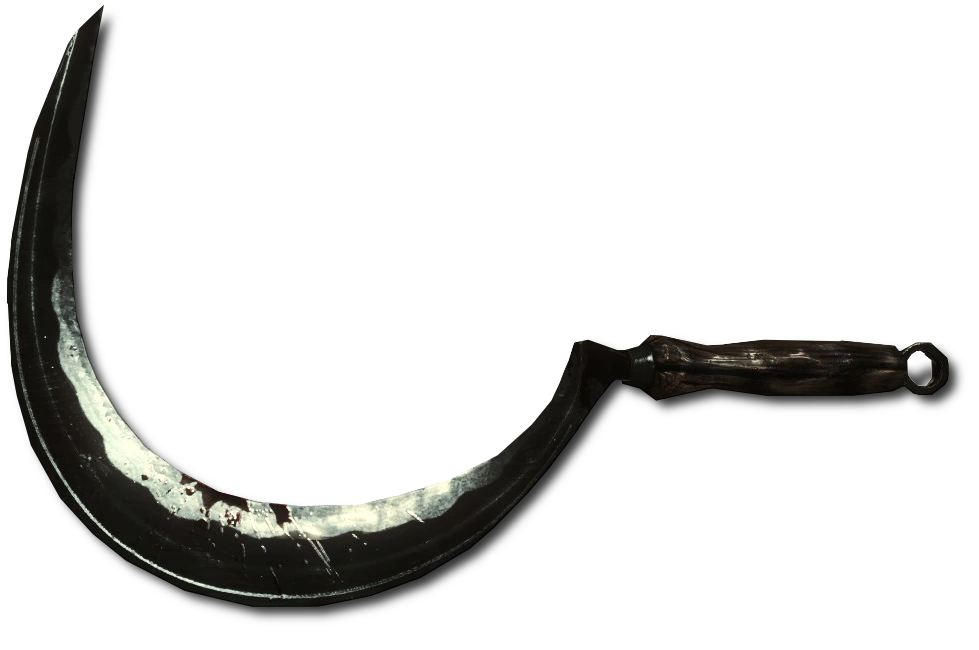
     So for all of your edification, and to get this off my chest, this is a sickle:


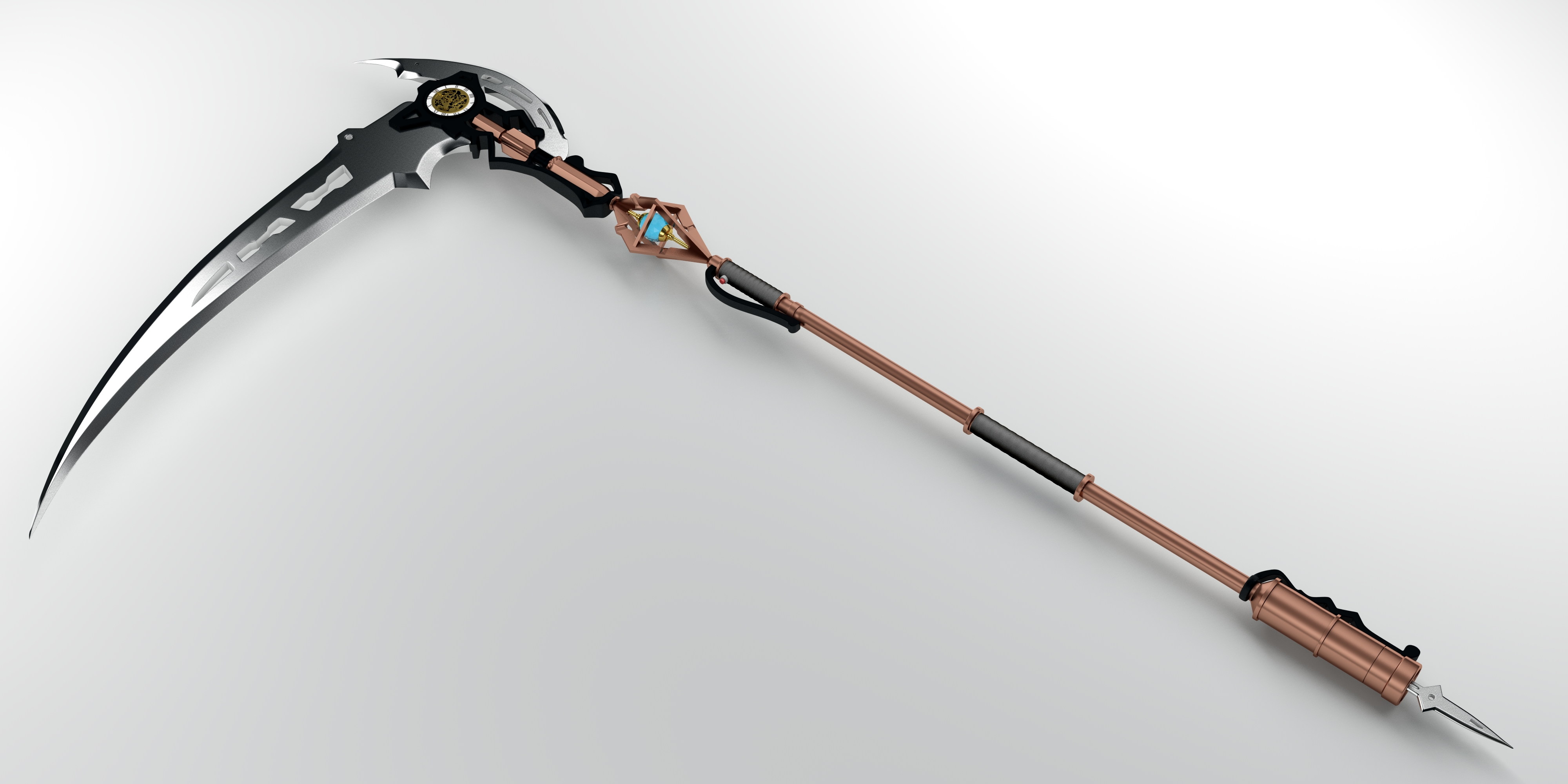
And this is a scythe:


Scythes are long-handled and meant for reaping wheat and other crops from a distance, so that one needn't bend down to slice.  They're typically two-hand.
     Sickles, on the other hand, are short-handled, meant to be wielded with one hand, and require the user to bend closer to the crops/target in order to get the job done.
     So!  Just to recap, the Grim Reaper uses a scythe:


     ... But Karkat Vantas uses a sickle.


     This has been Pet Peeves with Maggie C. and you have been Edified.  Hopefully this has been helpful to some of you.

     If anyone out there has any pet peeves about commonly mixed-up words or phrases, please comment below.  Maybe I'll use your suggestion for a future article. ;)