Showing posts with label Common Mistakes. Show all posts

Friday, February 23, 2018

"I Could Care Less" and Other Pet Peeves


     I've talked about pet peeves of mine before, little grammar flubs and spelling flaws that send my inner editor into convulsive fits.  Well here are five more, comin' atchya hot, and I'll get those engines revving by starting with the most powerful and descending in random order therefrom!


1.  So didn't/So Can't I

     This first started bothering me in the fifth grade.  And when I say bothering, I mean annoying the piss out of me holy shit.  When the students did it, it was one thing; we were nine, ten, eleven at most.  Mistakes are to be expected from children.

     But the teacher.  Oh, woe be unto her, though blessed she be, because good lord when I heard the phrase "So didn't she" come out of her mouth during a lesson on Native American life, I wan.ted. to. puke.  And when I say puke, I mean projectile vomit on the entire class.

     This peeve is not my pet, it is the bane of my existence, it is the skunk living under my porch that eats all my cats' food and every once in a while decides to spritz down my dogs, and I hate it.

     If the phrase were used in proper context, it wouldn't be so bad.  If someone said, for instance, "I didn't like the movie," and someone agreed with, "So didn't I," that would be fine.  A creative, realistic piece of dialogue.

     But the way people use it is always as a form of capable agreement.  "I can paint a picture," "So can't I!"  "I went to the Hawaii over the summer" "So didn't I!"  "I'll go to the store tomorrow," "So won't I."

     iT MAKES NO SENSE!  It's ridiculous, it's preposterous, I expect grammar fuckups from students, but something this severe from my teachers, my god--and on multiple occasions, not just a one-time thing, and never a correction, never once a student saying something, as if everyone else was blind to the blatant abuse of the English language occurring before our very ears!

    Please, for the love of all that is holy, do not use the phrase "So don't" to mean "So do."  They are antonyms.  ANTONYMS!


2.  I Could Care Less

    Okay, now that we've got some of my crazy out of the way; I could care less.  A phrase meant to convey how little one cares about the given situation.

     But it makes no goddamn sense.

     Because the actual phrase is "I couldn't care less."  It's meant to indicate that no fucks are left to be given.  You wouldn't say, "I could give a fuck," you say, "I couldn't give a fuck."  Saying you could care less indicates that you do care, because there's still less care in the world for you to feel, some cares left to give away.

     Unless that's what you mean, when you say "I could care less," you're fucking up, plain and simple.  If your character doesn't care at all, or wants to seem like they don't care at all, they want to say there are no fucks left in the bank.


3.   Affect/Effect

     So I had trouble with these for a very long time myself.  It's a difficult balance between the two, and grammatic education is going down the tubes, so a lot of people are in the same boat as me.

     The way I finally figured out how to differentiate between the two was essentially this;  Affect is a Verb, and Effect is a Noun.  See below:

     "The effects of the storm were horrible."

     "We were horribly affected by the storm."

     Next time you need to use one of these bad boys, take a second to ask yourself if the word you need is a verb or a noun--are you being Affected by it, or are you observing the Effects?


4.  Whining/Whinging

     So this one is included as a fuck you to yours truly, because for a long time I thought "whinging" was just people misspelling "whining" and it really pissed me off.  But it turns out "whinging" is a real word, meaning "To complain in an annoying way."  So it's basically the same thing as whining.

     It's very British (so British that my current spellcheck reads it as a misspelling of whining), which is why I never realized it was a real word.  I should make my peace with it.  It's a real word.  It's a valid word.

     But God do I hate it. 
(you don't have to tho)


5.  Peek vs. Peak

     Okay, just one more, not a pet peeve so much as just a word of warning.  A peak is the top of a mountain; a peek is something you do in people's windows.

     So it's pretty much like the affect/effect thing; if you want a verb, it's peek, and if you want the noun, it's peak.


     Happy writing all!

Monday, February 20, 2017

9 Suggestions For Remodeling The ReaderX Fic


     A while back I posted an essay in defense of reader insert fanfiction in which I stated at least twice that many, if not most, reader inserts are not well-written (but that everyone needed to calm their tits anyway).
   
     Other than reader insert writers practicing more, reading up on writing techniques, and improving their skills bit by bit (or more experienced writers jumping into the tidepool), there's not much that can solve the most prevalent issue with self inserts, which is, as I stated, lackluster technical skills in writing and story-telling.  With practice and with time, those things will come, but for now I do have a few suggestions that could improve the quality of ReaderX fics by restructuring some of the conventions of the genre.

     So now, for your consideration, I suggest to you:

1.  Do away with (y/n), (f/c), etc.

     Y/N, Your Name, F/C, Favorite Color, E/C, Eye Color, H/C, Hair color, F/F, Favorite Food, the list goes on; this vague parenthetical command is meant to draw the reader deeper into the narrative by allowing them to insert their own name, appearance, and various favorite things.

     The goal is noble, but the result is more distancing; having to read the clinical projection cues time after time only serves to remind us that we're reading a story, not experiencing it first-hand.  That's why Pokemon has you input your name before the game and then inserts it into the coding, rather than leaving a blank space or a (y/n) in the game text.

     In place of the parentheticals, a short description works better.  Because these stories are written in the second person, we're already experiencing the story as ourselves; it's okay to say, "You give them your name," or something like that.

     Doesn't, "You told them your name and they repeated it joyfully, thrusting their glasses in the air" flow better than, "'My name is (y/n).'  '(y/n)!' they shouted joyfully, thrusting their glasses in the air"?

     If something is going on that your character's name is said so often that it's necessary for it to be included in quotations rather than just in narration, an easy out is to have one of the other characters give "you" a nickname--either something cutesy/related to the fanwork, or something that has to do with the plot of your AU.  I'd be hard-pressed to find a place where a (y/n) is ever strictly necessary.

     There are a lot of places where the details are entirely superfluous anyway--because the author is already projecting their own tastes when they do things like design costumes, it seems silly to bring the audience out of the spell for the sake of a color.  Still, "She handed you a dress in your favorite color, much to your delight" is more seamless than "She handed you a (f/c) dress, much to your delight," and as I've discussed before, making sure your audience stays trapped in the reality of your story is The Most Important Thing, ESPECIALLY for a reader insert story.

2.  Fewer protagonists in default white

     As a white girl, I see myself reflected much more prevalently than any other race in pretty much every form of media.  The tides are turning of course, and many of us creative types are doing our damnedest to see more representation find its way into the public eye, but it's been hard work trying to break the back of this institution.

     But ReaderX fics are all about making sure that the audience is as absorbed as possible in the reality before them, right?  That's why we have the (y/n) (f/c) convention in the first place.  So it's extremely jarring to me when the author, who will be hard-pressed to describe concretely something as relatively inconsequential as an eye color or favorite type of burger, describes the POV character's skin color--invariably something along the lines of, "your peaches-and-cream complexion" or "the contrast between your white hand and his gray one."

     The white default is a setting that a lot of people haven't yet unlearned; we're taught from a young age that white skin is "normal," and the rest of the spectrum is "other," so when we go to read fiction a lot of people just assume that their characters are, of course, white!  And writers will do the same thing, which leads to entire series of books where the only characters who get a description of skin color are the ones that aren't white, because they are Not The Default.

     This is harmful for a lot of reasons, not least of all because it alienates people who aren't white and reinforces the idea that they are Not Normal.  In a reader insert story, it also reads as a statement from the author to any non-white person reading it that it wasn't meant for them to enjoy.  I know most people don't mean for it to come across that way, you just did what so many people do and went along with what you think of as the default skin tone, the same way we think of 5'4 as a default height for a woman or pizza as a default meal for Americans, but it can still hurt.

     If you had blue eyes and every ReaderX story you read had brown-eyed protagonists, you might feel excluded, right?  Like you were being ignored or worse, singled out--like you didn't belong in that fic, that "space."

     The best thing to do with a ReaderX fic in regards to skin color is just--don't mention it.  Unless race is super important (or you're some kind of alien creature with a canon skin color), leave it completely out of the equation.  Don't default to white; default to blank slate, the same way you did with the eye and hair colors.

3.  Give the character a stronger background/personality

     A lot of characters are these mostly blank slates with a tiny bit of personality and a smidgen of backstory.  Blank slate is great and all, especially with reader inserts, but part of the fun of imaging that you're in a different world is imagining yourself as having lived a different life.  In a lot of stories this is already a prerequisite--most of us don't live in the city that the story takes place in (if any of us do), and sometimes we're placed on entirely different planets, or in universes in which magic is real, etc.

     Don't be afraid to let the character have a bit of history.  Any detail you include in a story is going to make it so someone isn't going to be able to project themselves fully into that character without some cognitive dissonance, so you might as well make them interesting and less cardboard while you're at it.

     Giving a character a strong personality is also a risky business in this situation; you don't want it so strong that it's overpowering, because then people are going to be constantly saying, "I would never do that!"  Then again, the reason you read a ReaderX is because you'd never do what you're reading about doing.

     So go ahead and give us a strong, interesting personality.  Just make sure the character the audience is playing isn't too obnoxious; this is one of those times that a protagonist pretty much has to be likeable.  Otherwise the audience will feel like they're being insulted and will piss off.

4.  Less blushing please

     One thing that really gets my goat is how much blushing goes on in these stories; you'd think everyone had rosacea!  One blush for every three chapters should be the max, I'd say.  Some people may blush a lot in real life, but reading about it gets old. Especially when it's in almost every ReaderX.  

     Blushing is boring.  Blushing is the status quo.  It's time we break free of that.  And this is more than just about the blushing.  This is about a specific type of personality that we've seen a thousand million times, and maybe it's just person taste, but as a reader insert reader I am sick to death of blushing and stumbling over myself every other sentence.  I've been that person IRL; I don't need to read about being that way.

     Let your characters be confident, charmed and charming in return; let them be flustered when flustered is appropriate, sure, but don't make the protagonist go all stupid every time they accidentally touch the main love interest.  Most of us in real life hold our lives together pretty well, no matter how punchdrunk we are around our special someone, and don't let ourselves fall to pieces just because they know our name.

     We're not the stereotype that Disney created, and I think it's time that reader inserts explored a fuller range of emotion.

5.  More realistic flaws

      ReaderXes suffer from a lot of the same problems as OC fanfiction, because every reader insert is an OC on top of being a more-or-less blank slate.  One of those problems is the Mary Sue issue; no flaws.  Or, if there are flaws, only those which don't impact the plot.
 
     Problems are never their fault, they may stumble around cutely, but they're not going to do something like embarrass their date because they have no table manners, or become possessive or something of the like.  Try to give your characters flaws that will influence and even drive the plot; we're not perfect.  The protagonist doesn't have to be perfect, either.

     Alternatively, we see characters that are just walking Flaw-Bombs waiting to go off.  They're obnoxious, they make unnecessary drama, and no one should like them, yet for some reason everyone does.  Make sure your other characters are responding accordingly to the stimuli provided them, no matter how pretty your protagonist is.

6.  Fewer miscommunication plots

     Rule of thumb; if your plot can be resolved in under two minutes if your characters just sat and talked, it's not enough of a plot to warrant a serious story.  Miscommunication is great for comedy, but in serious plots it gets frustrating.

     The whole "This isn't what it looks like!" storyline, for example:  if a character can say, "Tom, he's my cousin," and the whole thing is resolved?  Not worth more than five hundred words as conflicts go.  If a character says "Tom, he's my cousin," but she's lying, on the other hand, or it's not the whole story, then that warrants a fuller investigation.

     Also, if your character is so jealous they can't even wait around for someone to explain themselves after being caught in a compromising position, they clearly don't trust their partner, which is a red flag as far as the health of the relationship goes.  In fact, if they're walking out on them without an explanation, they clearly don't respect their partner, and to me that's a "break the camel's back" kind of straw.

     Be careful with your melodrama.

7.  More male POV characters

     Or better yet; more characters with no specified gender.

     There may not be as many men/boys who read reader inserts as there are girls, but that may also just be a confirmation bias; how do you know they wouldn't like it if they aren't given a chance?  Plus, there are many girls who wouldn't mind adopting a male persona over the course of your story, and a lot of people who don't fit into the gender binary who would like to see themselves reflected in the story.

     More stories written with a broader audience focus would be beneficial; anyone can write a story from a male perspective now and again, and you can easily write a story in the second person without using gendered pronouns for the POV character.

     Give it a shot; let's make the protagonists a little more diversely applicable.

8.  More female love interests

     Male love interests are the default in ReaderX land, but there are a lot of people interested in the female characters of a given work, whether boys who like girls, girls who like girls, nonbinary folks who like girls, etc.

    Even outside the context of romance there's a dearth of female characters.  I'd like to see more involvement of the female characters in these types of works, not just as love interests but as friends, colleagues, even siblings.  Don't turn them into strawman bitches "getting in the way" of your self ship or ignore them altogether; give them a chance to get in the mix, too.

     I guess the title of number eight should really be More strong female characters, not just as love interests.

     And as a side note, friends in general are always good!  Too many ReaderX protagonists are lone wolves who have no one to talk to except the person they love; people need friends outside of a romantic relationship.  Whether it's a character or characters in the cast or an OC, let the insert have some companionship.

9.  More choose-your-own-adventure type stories

     These needn't be the complex type you see on the shelves of your local library, but I'm a sucker for a  ReaderX that sets me up with a storyline, then veers off into different paths that I can choose from.  Do I want to pursue this character, or this character?  (I'll probably choose one, then go back and read the other bc I'm a fiction ho, shhh ;) )

      This semblance of interaction makes the audience feel like a part of the story, and wraps them up further in the protagonist's skin; it gives us agency, and we all love to feel like our choices matter.  After all, if our choices matter it serves to reason that we matter, right?


     So there you have it folks; my take on how to improve the ReaderX genre as it stands.  Do you have any opinions on the ReaderX genre?  Do you have any suggestions I might be missing?  Or am I the only self-indulgent asshole with a writing blog?  Leave a comment below, so that I might one day embark a journey to become self-aware.  ;)

Friday, February 3, 2017

6 Things I Learned Editing My Second Novel


  1. Apostrophes


It was with the help of a friend of mine who served as my first editor that I learned the trick to apostrophes--another thing they don’t teach you in school.  

So here’s the trick; apostrophes can mean three things in modern English.  Most commonly known, they denote contractions--"He is" becomes "he’s," "they are" becomes "they’re," etc.  


Most commonly written (I assume), and least commonly understood (as I understand it), they’re used to show possession.  In the sentence, “That is Tommy’s house,” the ‘s on the word Tommy shows us that the house is his belonging.

Thirdly, apostrophes c’n be used to show th’t l’tters’re missin’, e’en when a word ain’t contracted!  It’s useful fer writin’ dialect, y’see.  

But never, NEVER, NEVER, is an apostrophe used on a plural s.  It may be used beside a plural s, as in, “the Joneses’ house,” but if there are two cats, you’d never write “the two cat’s.”  That is apostrophe abuse & the grammar police WILL find you, and they’ll take those two cats away from you FOREVER, so watch y’r back m’friend!


  1. Fit the theme

I fucking love science, especially biology and quantum physics, but pretty much all science, science is amazing, shut up.  So when I was writing my second finished novel, The Koci, I dribbled in some science stuff because I was learning about fibrin and wound healing in bio and I was all like, “This is metal as FUUUUUUUUUUUCkkkkkkk.”  

And by “dribbled in” I mean I put in like one thing.  One paragraph, describing how, unbeknownst to the main character, his fibrin was at work healing his wounds while he slept.  To illustrate how ridiculous this was in hindsight, this was a story about people who shapeshifted into big cats living in closed-species societies that were pretty much constantly at war.  A species that hadn’t even reached a point where they could perform rudimentary autopsies.

Jeez, little Coates, get it together!

The point is, when you create a world, you need to keep things consistent with the time and theme; a teenager in the fourteen hundreds isn’t going to think about the atomic structure of the universe unless they’re a time traveler, and likewise, a modern doctor isn’t going to think about healing in holistic terms.  

You can pull off juxtaposed viewpoints and worldviews, especially if your theme has something to do with the differences or similarities between past and present, or societies which progress in different ways or at different rates--but in that case, you need to be consistent with your juxtapositions.  Don’t just throw shit in because it’s sick af; it has to fit the mood of your piece.


  1. Conservation of detail


The law of conservation of detail essentially states that if it isn’t important, you don’t describe it, and that, relatedly, if it is described, it must carry some modicum of importance.  People don’t want to stick around for description of things they don’t care about if it serves no purpose.

This applies to events or even entire scenes or mini-arcs as well as descriptions, objects, or characters.  That sequence where those cat-people straight-up murder a pregnant catlady and rip her open to steal the babies inside her might be sick and twisted and very telling as to how that band of criminals operates and all, but if it has effect on the main character, it’s gotta go.  Same with that forbidden romance literally nobody but the two side characters involved in it know about, and the sequence where the main character goes for a long walk and describes the scenery in great detail for no good goddamn reason.

Detail is like a gas, and the right amount of any gas is required for the Earth to continue to function the way it does.  But when you get too much of any one gas, it throws off the natural balance and starts eating away at your story’s ozone.  Give a hoot gurl, don’t pollute ur fictional world.
  1. No long character lists for no reason


WHEEEEEN i wrote The Koci, I knew every single catperson that was in The Army; I knew what their job was, I knew who they were related to, I knew what their secret activities were, I knew EVERYTHING about them all, and I. Had. A. LIST.

So for whatever reason (don’t lie Maggie, you know the reason, you thought you were being all cool ‘n’ shit) I decided it would be a great reason to have one of my characters fUCKIN LIST ALL HUNDRED AND FUCKIN TWELVE CATPEOPLE IN THE ARMY, replete with jobs and descriptions and relationships oh my god.

Yeah, in hindsight it’s pretty embarrassing.  This is another “conservation of detail” thing; it was an unnecessary infodump, and I’m glad my editor talked me out of it before I had the chance to embarrass myself.  

If you ever do feel the need to include a list of all your characters, make sure it’s necessary, and not just a huge pile of useless information.


  1. Random events must immediately relevent


So for The Koci I had a plan for a future sequel that I planned to call The Strangers, which would be all about a few human survivors of a nuclear apocalypse floating to shore on the island that the Koci occupied.  As a foreshadowing type thing, I had a blast of light white out the sky and melt all the snow toward the end of the book, but because nothing else in the story plays into that event, it comes across as random and weird.

In fact, it makes no sense.  You might be able to pull something like this off in a second book of a series, since if people are invested enough to read the second they’ll probably stick around to find out what’s up in the third, but for a first novel, especially one where it’s all pretty self-contained, you’re going to want to skip that bit.  Save it for the next book, kemosabe.  


  1. Fireflies are dead by the time winter comes you moron


My last scene had fireflies circling the main characters and then flying away.  But, as I said before, there was supposed to be snow on the ground; those fireflies would be deeeaaadddd.

Past me should have known better.  

Wednesday, February 1, 2017

3 Common Near-Homophone Mix-ups


     Homophones!  From "Homo," meaning "Same," and "Phone," relating to sound.  Thus, Homophones are words that sound the same--the three they're/there/theirs of the apocalypse, for example.

     So what is a near Homophone?  It's those pesky words that sound or are spelled alike, but are not the same, and do not have the same meaning--this is sometimes just a misspelling, but more often arises because someone has confused or conflated the meaning of two very different words.

     These are a few of the most common mistakes I see, and what the correct usage is for each.

1.  Wreck Vs. Wreak

     I see this a lot in fanfiction, particularly with the phrase "____ Havoc."   This one bothers me a lot--not for any particular reason.  It's just one of those things that gets under my skin; a pet peeve.  So here I am to set the record straight!  Is is Wreak Havoc or Wreck Havoc?

Short Answer:  It's Wreak Havoc.

Long Answer:  Wreak is a verb which means "to inflict," whereas the verb form of Wreck means "to destroy."  What this means for us is that when you wreak havoc, you are inflicting it on others, but if you were to wreck havoc, you would be destroying havoc itself, which is a much more heroic deed than is typically meant.


2.  Leer vs. Leery

     This one I've included primarily because it confused me for a long time.  "What the fuck," I kept saying to myself, stroking my imaginary mustache, "why are people using leery in place of wary?

     It turns out that leery does not mean to gaze upon another with a leer (an often sexual way of looking at someone slyly or maliciously), but to look at them with well-earned suspicion, as though wary.

     So there, ME, in your face!


3.  Weary vs. Wary

     This one is back to other people, though.  *shoves all my self-loathing at the monolithic masses*

     The words "weary" and "wary" are often confused for one another, especially by new writers.  Sometimes this is a typo [insert cautionary tale about double-checking your documents for errors spellcheck didn't catch], but sometimes it's not--and you can tell when every single use of one, the other, or both is incorrect.

     In the interest of helping out everyone possible, herein lies the difference between the two; wary means cautious or suspicious.  Weary, however, means tired or sleepy--so one is wary of that sketchy dude stalking past your window in the dead of night, but grows weary of the act after the second month.


     So there you have it, folks!  Are there any near-Homophone mixups that irk you as you read?

Wednesday, July 13, 2016

Pet Peeve: Scythe vs. Sickle


     This is purely a personal pet peeve; I often see people using the terms "scythe" and "sickle" interchangeably.  It comes up a lot in stories about the grim reaper, or fanfiction about canons wherein characters use sickles or scythes as weapons, and once in a great while when discussing the communist flag.  Thankfully, people writing stories about farms tend to know the difference.
     Usually.
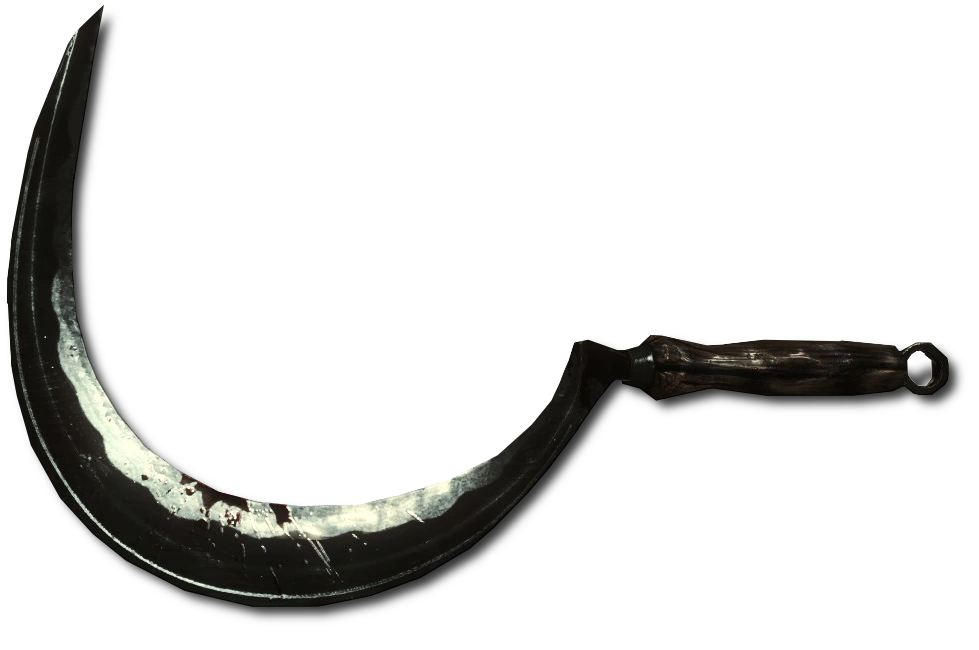
     So for all of your edification, and to get this off my chest, this is a sickle:


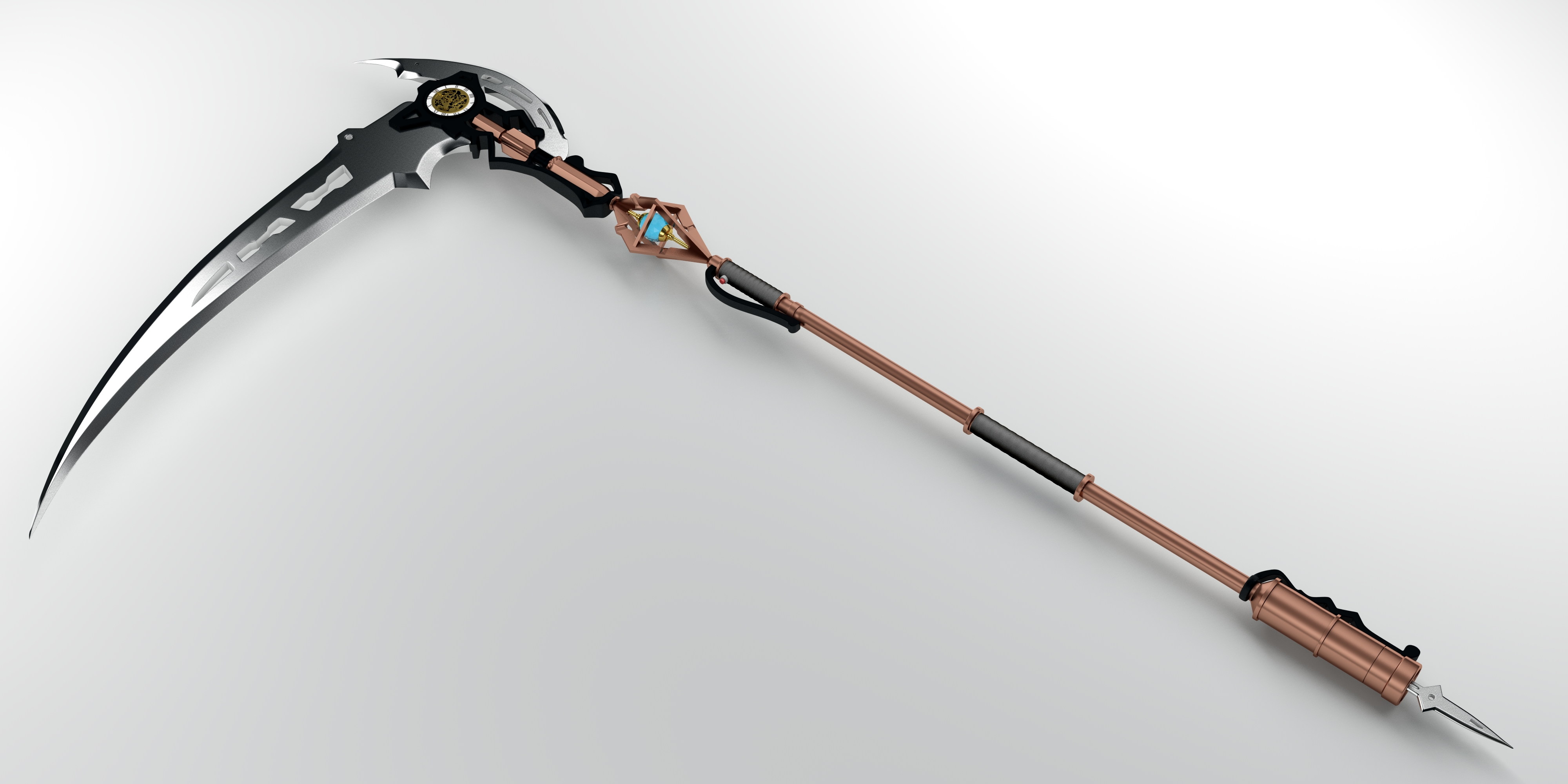
And this is a scythe:


Scythes are long-handled and meant for reaping wheat and other crops from a distance, so that one needn't bend down to slice.  They're typically two-hand.
     Sickles, on the other hand, are short-handled, meant to be wielded with one hand, and require the user to bend closer to the crops/target in order to get the job done.
     So!  Just to recap, the Grim Reaper uses a scythe:


     ... But Karkat Vantas uses a sickle.


     This has been Pet Peeves with Maggie C. and you have been Edified.  Hopefully this has been helpful to some of you.

     If anyone out there has any pet peeves about commonly mixed-up words or phrases, please comment below.  Maybe I'll use your suggestion for a future article. ;)