Monday, July 18, 2016

Podcast Starter Pack


     Want to start a podcast?  Not sure quite how to get yourself set up?  Here's a quick guide to getting yourself set up with the basic necessities!


1.  Idea

     This is the most important thing, absolutely 100%, and I'll tell you why; without a good idea, the rest of it doesn't matter.  You can have the best recording and editing equipment in the world, but if what you produce isn't fully thought out and you aren't passionate about it, no one's going to want to listen.

     In fact, passion for the idea is more important than it even being well thought-out or logical or easy to follow, etc., etc., because if you're passionate about it, the rest will come--someone will be interested in your work if you're passionate enough, because people are attracted to passion.  Don't half-ass something generically cool, guys, whole-ass something you really really care about.

Image result for audacity2.  Audacity

     If you're looking for a cheap high-quality in-compute recording studio, look no further than audacity (downloadable here).  Audacity is free to download and use, it allows you to record, mix, match, sync, add effects, and even synthesize some simple tones.  With an easy-to-find guide or a little experimenting, you can do all kinds of cool stuff with your audio, and it's really easy to add music or sound effects off other aud. tracks or MP3s.  Plus, provided you have the right installments, you can easily export your work as MP3 tracks as well.

      Basically, if recording studios were stores, Audacity would be Walmart.

3.  Recording Device

     Also extremely important; the podcast just doesn't happen if there's no way to get your audio onto the internet.  You can record with a simple mic plug-in, your iPhone, probably (I don't own one, so I've just taken to assuming that smart phones can do everything), a mic headset, etc, but if you're looking to do this right, and for the long-term, I recommend investing in a nice standing mic and a pop filter.

     I use a Snowball myself, and I'm super happy with it; it was much cheaper than most recording devices of like quality, and it fits my needs perfectly, with a range of hearing that allows you to record at a distance, without having to worry about picking up your next-door neighbor shuffling across their floor.

  4.  Soundcloud

     There are other podcasting stations you can use for free, of course, but I think soundcloud is an easy place to start--it's free to sign up, simple to use, simple to stream, simple to download.  Definitely look into other online venues too, but Soundcloud is always a safe place to start.


5.  Logo

     A logo is important--whether it's a photo with writing on it, a drawing you made yourself, something you commissioned from an artist friend, a stock photo or a collection of clipart, your logo is the first way that people will judge your podcast.  Make sure it fits the tone and theme of your work, and has something to do with what your podcast is going to be about.

     Maybe don't use a picture of the sky if it's about dogs, for example.


     Have all that together?  Have a script ready, if it's scripted, or friends together if it's a talk show, etc, etc?  Then you're ready to leap into the wonderful world of podcasting!

     Go, my friends!  Go forth and create.

Friday, July 15, 2016

On Repo! The Genetic Opera: Why "Genetic Emancipation" Falls Flat; a Critique of the Cure Narrative

SPOILERS FOR REPO! THE GENETIC OPERA AHEAD


     Let me be blunt:

     Repo! The Genetic Opera is my shit.

     I waited three years to see it after watching "Let The Monster Rise" on Youtube, and I'm honestly considering the DVD now that's off Netflix (a true travesty).  The musical score is amazing, every song furthers the narrative, the actors' voices are transcendent (give me Anthony Stewart Head in everything please, I need his voice in every soundtrack from here until the end of time), the scenery is perfectly eerie, the way the story is told is fascinating and engaging, the characters are delightfully complex and twisted, and I just can't praise this movie enough.  Someone hire me to talk this movie up to people, I'll do it and I'll do it with soul.

[warning again, spoilers from hereon in]

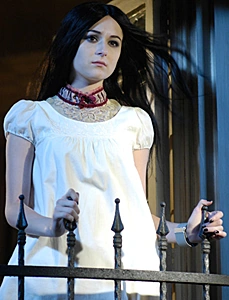
     Repo! deals with themes of family and genetics, which are very important to me--Shilo(the protagonist)'s rebellion against her genetic code drives the narrative and the stakes; she inherited a genetic disease from her mother which causes her to be pale and sickly, her hair falling out and her blood pressure low.  Her father wants her to stay locked inside her room--she is, after all, all that he has left of his dead wife, and the only thing left that he loves.

     None of this sits well with Shilo, who poses the question in her song "Infected,"

          "How much of it's genetics, how much of it is fate, how much of it depends on the choices that we make?  He says I have her eyes, do I also inherit his shame?  Is heredity the culprit, can I stop it, or am I a slave?"

     This is the thesis question to the entire musical--the question of what your genetics really mean.

     As a person with poor genetics myself, dealing with fibro (chronic pain) and Tourette's (a neurological movement disorder) on top of other sundry concerns, this question is one I often ask in my own works, and its exploration is in some ways an exploration of self.  How much choice do we have?  How much of our family's shame do we inherit?  Are we destined to make the same mistakes as our predecessors?

     Repo!  The Genetic Opera does a wonderful job of exploring these themes, and I could break the movie down to talk about each piece individually (I might do that one day), but for now I'll skip to what's got me agitated--the end.
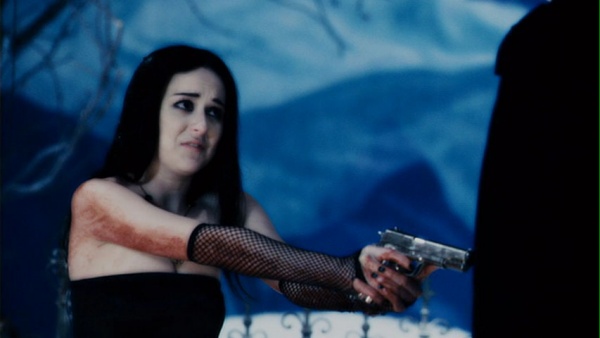


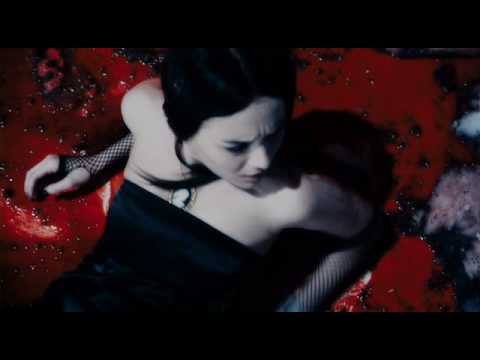
     Spoilers again, if you didn't read, or ignored, the first two (one must cover all their bases, mustt one not?); at the end of Repo! Shilo has discovered that her father is the Repo Man, Rotti Largo, owner of Geneco, has called for the Repo Man to kill Blind Mag, Shilo's God Mother (who took her own life instead), and Rotti has put out a call to destroy Nathan, who wants to kill Rotti for stealing Shilo from him.  Rotti offers Shilo the chance to inherit Geneco (he's dying and his children are human garbage fires), but she can only cash in on the inheritance if she kills her father.

     Rotti then reveals that Shilo was never sick to begin with, but that her father poisoned all her "medicine."  He insists that she fight through the pain when she starts to redline, and she passes out.  When she wakes up, she's cured.

     She decides she can't kill her father, she's not a murderer like him, and Rotti shoots him instead.  Rotti then dies as well, and Shilo comes to the conclusion that no one is a slave to their genetic code and we all have the power to choose what we are, in the aptly named song "Genetic Emancipation."

     She then walks out of the opera house and vanishes into the night, the thesis properly answered before the Graverobber jumps in for the last stasima to hammer home a moralization about grudges gone too far.

     This is great, wonderful, beautiful, perfect.  I love it, I admire it, I ADORE it.

     Except--for Shilo's illness.


     The reveal that she was never sick is super dramatic and says so much about the depths of Nathan's twisted need to keep what he loved locked away from the world for only him to see.  From that perspective, it's a great choice, a very dramatic, unexpected, welcomed twist.

     But it means that Shilo is totally free of her "genetic" burdens--in fact, she never had a genetic burden, just an abusive father.  It's a cure narrative--subverted and wound around a nail, but a cure narrative nonetheless.  Worse, it's an easy cure narrative--she didn't do anything to earn or fight for it, she just denied herself medical treatment, passed out, and woke up better.

    It really weakens the message of the film.  It's supposed to empower and tell us that we, too, can be free of our genetic worries, that our lives are in our hands and we can do anything and shed our blood ties like water from a rainslicker.

     But Shilo's ties are gone--she has no kin left to shame her, just their memory, and she doesn't have to worry about being sick anymore.  She didn't even cut any of her own ties, they were all cut for her.  Despite her insistence that everyone has a choice, Shilo never did--all those decisions were made for her.  On top of being cured, it wasn't even done with any agency.  Had she figured it out for herself, or devised a cure on her lonesome, or even with help, had she done something, anything to cure herself of her disease, I would probably be a million times less upset, but like many narratives based around disabled people and teenage girls, she was deprived of her choice and agency in the matter.

     So for someone who still has to deal with the viruses in my genetic code every single day of my life, who relies on my medication just to make it through the day, someone who can maybe run away from my family if I want to but can never cast off the broken strands of my DNA, the ending rings hollow.  It feels like Shilo has no leg to stand on.  Her "Genetic Emancipation" is closer to a Phenotypal Emancipation, a Poison Emancipation, a Parental Emancipation--her triumph isn't over her veins except in the sense that she's eradicated what's lurking therein, and, again, she didn't even work for it.  She only had to sit and not take her meds.

     .....  Which, now that I think about it, is a really fucked up thing to leave as an example of the "right" thing to do.  If Shilo had still been sick, she would have died.  Not even figuratively, ignoring her medication like that could have straight up killed her, or at the very least caused some serious damage by the time they got her to a hospital.


Take your meds, kids.

     It also intimates that those of us living with these disorders are somehow lazy or cowardly--being cured is so simple, you don't need medication, you just need to get back to your roots and you'll be better in no time!  Just take the magical one-time-treatment cure-all and everything will be fine, you'll be all better!  What, you're still sick?  How can that be!?  Well, you're just not hoping hard enough, if Shilo can be cured after passing out for two seconds, why can't you?


     With her illness looming over her and a continued need to procure and take her meds, the ending would have been a little more of a downer, sure, but it would have been more powerful for a girl still struggling with her condition to announce herself emancipated--bound to her genetic code, maybe, but not a slave to it, able to make her own decisions even with her limitations.

     I would have loved to see a sick Shilo tell everyone that they were free, because sure, it would be a different kind of free for her, but it would be an authentic free, and for those of us who live with chronic illnesses and other disabilities, freedom is of a different sort; I want to hear it said that we do have limitations, but we can still go chasing flies.

     It would also be important to show that for Shilo, her biggest obstacle is her father rather than her disease, which is sometimes the case with real disabled people--it would all be much more manageable without overprotective or under-sympathetic family members getting in the way.

     I have limitations, but I can still catch flies, and stand on the balcony, and every once in a while, when I'm feeling good, I can go to that opera, damn it.  Assuming that the only happy ending for Shilo is the one where she's no longer sick is an assumption and assertion that the disabled and the chronically ill can never be happy.

     Illness makes life hard, but not impossible--if she had something that was medically manageable, there's no reason she couldn't have had a happy ending anyhow.  It's not even like the ending was terribly optimistic, either--a sheltered teenage girl walks off into the night in a crime-infested city in a post-apocalyptic world with no friends or family left alive.  Her best bet is already with the Graverobber, and seeing as he has great connections, no qualms about getting what he wants from dangerous places, and a crush on our heroine, I'm sure he would have been happy to supply her with the medication she needs.  Though perhaps at a price....

     BOOM!  Sequel.  Eat your heart out, Darren Smith and Terrance Zdunich.


     Look, I love, love, love this movie, to the stars and back!  But it has its flaws.  On its own, this ending would even be clever and cheerful, but stacked together with other cure narratives (of which there are thousands), it sends a pretty harmful message to the very people it's ostensibly speaking to.
  
     And maybe that's the problem--this story, written about a girl with a genetic blood disorder questioning what it means to be bitch-slapped by your genetic code, wasn't really written for us, the people who actually live with this very conundrum every day.  It was written for the people who worry that they'll become alcoholics like their dad, or make the same mistakes their mother did, or die at age fifty because that seems to be the family curse.  And that's fine!
     
     It's just ... sad.  

Wednesday, July 13, 2016

Pet Peeve: Scythe vs. Sickle


     This is purely a personal pet peeve; I often see people using the terms "scythe" and "sickle" interchangeably.  It comes up a lot in stories about the grim reaper, or fanfiction about canons wherein characters use sickles or scythes as weapons, and once in a great while when discussing the communist flag.  Thankfully, people writing stories about farms tend to know the difference.
     Usually.
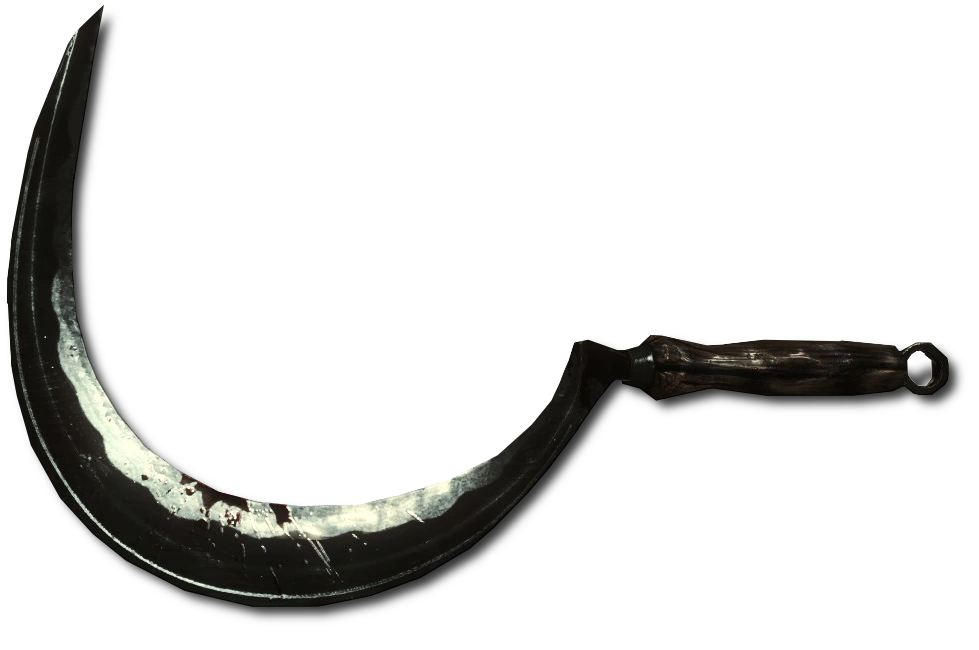
     So for all of your edification, and to get this off my chest, this is a sickle:


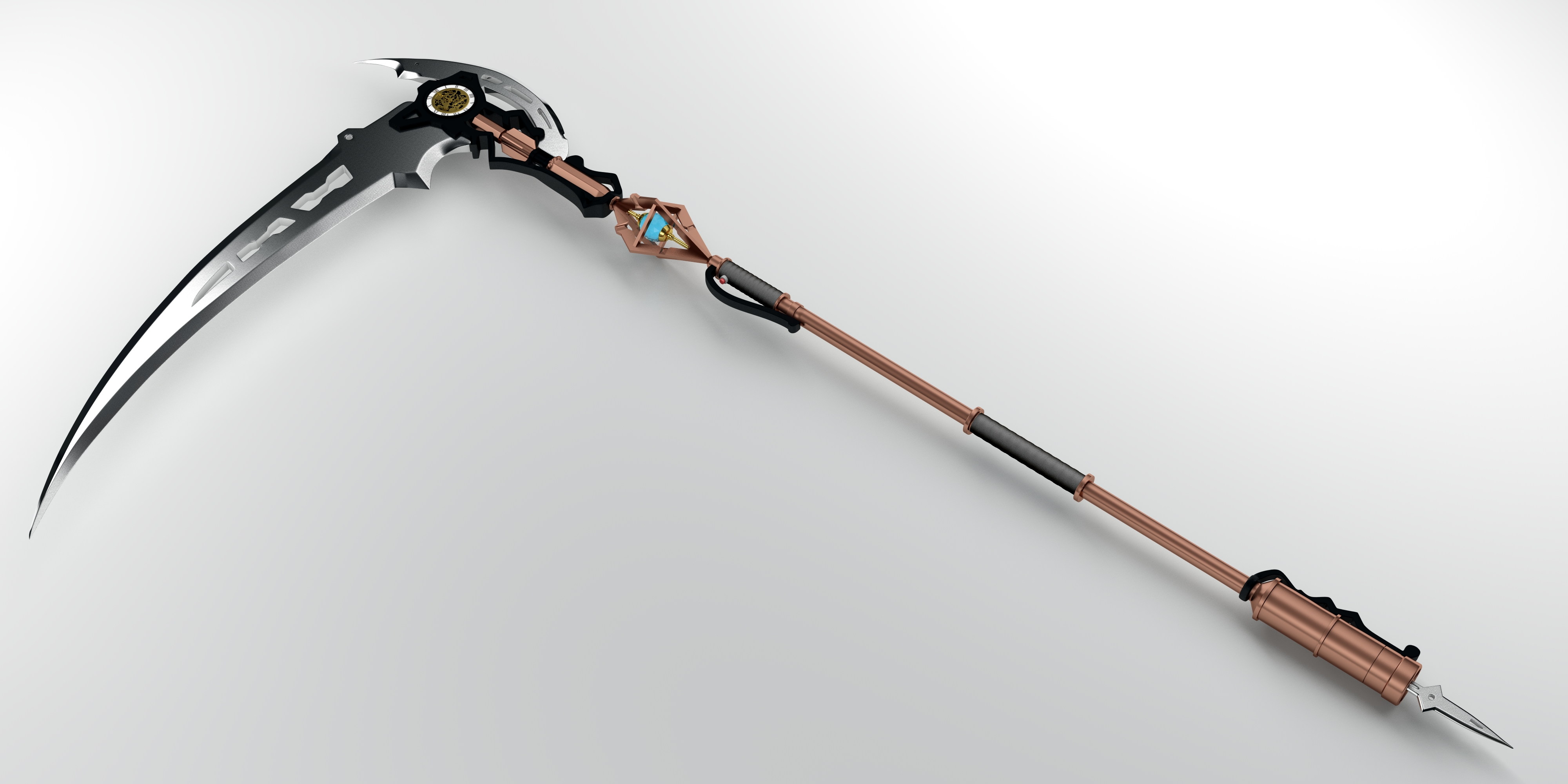
And this is a scythe:


Scythes are long-handled and meant for reaping wheat and other crops from a distance, so that one needn't bend down to slice.  They're typically two-hand.
     Sickles, on the other hand, are short-handled, meant to be wielded with one hand, and require the user to bend closer to the crops/target in order to get the job done.
     So!  Just to recap, the Grim Reaper uses a scythe:


     ... But Karkat Vantas uses a sickle.


     This has been Pet Peeves with Maggie C. and you have been Edified.  Hopefully this has been helpful to some of you.

     If anyone out there has any pet peeves about commonly mixed-up words or phrases, please comment below.  Maybe I'll use your suggestion for a future article. ;)

Monday, April 11, 2016

Shout Out To The Kids Who Tic


I posted this on my Tumblr a few days ago, but I figured I might as well post it here, too, because it's important to me, and may be important to some of you, too, so here, have some positivity:


Shout out to the autistic kids with Tourette’s
Shout out to the allistic kids with Tourette’s
Shout out to the kids with Tourette’s that have no comorbid disorders
Shout out to the kids who have so many comorbid disorders it sometimes feels like you’re drowning
Shout out to the kids who have very soft, tiny tics, and shout out to the kids who scream and punch things when they tic
Shout out to the kids with self-injurious tics, shout out to the kids with palilalia, echolalia, coprolalia, shout out to the kids who don’t fit into any pre-determined categories and shout out to the ones who fit in ALL the pre-determined categories
Shout out to the kids whose doctors try to de-diagnose them, shout out to the kids still waiting for a diagnosis, shout out to the kids whose parents or teachers or classmates tell them they’re faking, to the kids who are starting to wonder if maybe they are faking, shout out to the kids who are happily and firmly diagnosed and who are fortunate enough to have supportive kith and kin, shout out to the kids who never have to doubt that they’re telling the truth
Shout out to the kids who’ve been ticking since age 2, shout out to the kids who didn’t start ticking until sixteen, shout out to the kids who grew up and don’t tic anymore, shout out to all the adults who were told they’d stop ticking at eighteen but never did, shout out to the kids whose whole family tics and shout out to the kids who happen to be the first Tiquer in their family line
Shout out to the kids on medication, to the kids who never took medication, to the kids who tried medication and decided it wasn’t for them, shout out to all the kids who were prescribed medication they never should have been offered and ended up worse off because of it, shout out to the kids on medication who love their meds, shout out to the kids on medication who still tic because suppressing and managing isn’t the same thing as curing
Shout out to the kids with 504s and IEPs, and shout out to all the kids who live in a school district that won’t acknowledge them, shout out to the kids who can’t afford a diagnosis, shout out to the kids whose parents don’t believe them when they say they can’t help it, shout out to the kids who made their parents listen
Shout out to the kids who have to educate others every day of their life, to the kids who have to explain their disorder to every substitute so they don’t get yelled at, to the kids who are raising their voices and forcing the world to take note, and shout out to the kids who are shy or timid, to the kids who would rather blend into the background and not have to fight to be accepted.  
Shout out to the kids who laugh at their own tics, who cry about their tics, the kids who hold it all in until they explode at the end of the day and the kids who just let everything flow and don’t care who sees.  Shout out to the kids who struggle to get by, and shout out to the kids who are living well, and shout out to all of you living in between.  
Shout out to all my fellow Tiquers out there, the ones that have Tourette’s and the ones that Tourette’s is trying to take–you are strong and beautiful, and every day that you get through, no matter how difficult, no matter how strenuous, is a day that you become stronger and more vibrant.  There’s no wrong way to have Tourette’s, there’s no wrong way to respond to your overactive nervous system, you are doing you, and the you you are doing is perfect just as it is.  I believe in you, and you should believe in you too.
I am here for the kids who tic

Monday, April 4, 2016

Things I Learned Making My First Two Podcasts


1.  Websites are dicks

     Before I put up my podcast I tried to make a website, and I bought a one dollar domain from GoDaddy, because I'm a broke idiot with stars in my eyes who didn't realize that you had to pay extra money to attach that domain to a website, and since I have no steady income right now I basically can't use my own domain.  Lesson learned.

2.  No one cares

     As with any project placed into the public realm, it's an uphill battle to get anyone besides yourself to care.  My first podcast sat for an entire month before anyone deigned to listen to it once, and I didn't honestly expect much different--my writing persona is relatively new and no one is going to be as interested in your work as you are, at least not for a long time.  Sometimes you're an overnight hit, but much much more often, it'll take a lot of work to get yourself off the ground.
     (But that doesn't mean you shouldn't try.  You just have to push harder.)

3.  You'll put in more hours than you'll get out

     I knew this going into it, of course, but I didn't realize quite how much time would go into it.  I figured I might have to spend two hours on a half hour episode, and I was wrong; between writing and rewriting the script, rehearsing and recording it, and editing it all together, I'm fairly certain I put somewhere between seven and fifteen hours into that first episode.  The second episode took me nearly ten hours, and it was only seven minutes long!
     The time you put into it will increase the quality, of course--if I didn't want to put in the time, I wouldn't have started the podcast in the first place.

4.  There's no need to be afraid to show your kith and kin

     In general, I feel better about sharing things I care about with strangers than with people I know.  Part of this is because, yes, I know, consciously, that we are allowed to ask for attention, but I grew up in a society (and environment) where it was frowned upon, and it's a lesson I've internalized very deeply, so I try not to talk too much about what I'm working on except in passing.
     Another part is that disapproval from people you care about hurts more than it does from strangers.  And, the biggest deterrent for me, I grew up in a small mostly-white farm town in upstate New York, which means I know a lot of conservatives, which, if you've spent a lot of time on my blog (or any time on my twitter), you know I'm not.  By a long shot.  To that end, I write a lot of not-conservative things, with a lot of liberal themes and characters.
     My mother's family is also extremely religious, so they frown on things like cursing, which I do often, both as a matter of neurology and as a conscious mood/character choice.  To that end, I'm often reluctant to share anything I write with them.
     But in order to show the podcast to one of my friends who wanted to listen to it (and who co-starred in the most recent episode), I had to post it on facebook, where all of those fears were just waiting to come screaming up to devour me!  ... and didn't.  Actually, I got a pretty positive response from my friends, both the ones I've made out here and the ones I left back home.  It's really nice to know that my efforts are appreciated, and no one's said anything negative at all.  Just goes to show that sometimes people can surprise you for the better!

5.  My voice is higher than I thought

     This makes sense, since I'm hearing my own voice as it sounds echoing inside my skull, but it's still jarring, and since my MC is supposed to have a deeper, more gruff voice, I have to keep that in mind whenever I record.  It helps to listen to do a test recording or listen to each take once its finished to remind myself that I need to go higher/lower.
     Basically, as a general tip when listening to yourself in recording, be prepared for your voice to sound different from the way it usually is.

6.  Screwing around with Audacity is sometimes the best way to get stuff done

     Honestly, sometimes tutorials won't give you what you need.  I found a number of tutorials for creating a robot voice effect when I went looking for it, and none of it worked--they all sounded like robots, to be sure, but they weren't clear enough, and I wanted the character to be well-understood, and also to retain some of the flavor of her voice--not too robotic, in other words, just robotic enough.  So I had to mess around with things until I did, and it turned out great!
     Never be afraid to mess with your equipment--just make sure you save the pre-editted version, just in case.

And that's some of the stuff I've learned podcasting so far!  It's an adventure.

Monday, March 28, 2016

Some Quick Tips For Writing Scripts


1.  1 Page=1 Minute

     When you write a script, whether for stage or podcast or screenplay or teleplay, the given rule is that one page of dialogue, properly spaced, will yield one minute of stage or screen time.  If there's a good deal of action going on, or the page is full of three-word quips it'll be longer or shorter of course, but generally speaking those instances tend to balance each other out.
     If it's a full page of monologing though, as is the case with something like an audio book or a one-man podcast, my experience is that it tends to be closer to three minutes per page.

2.  Keep An Eye on Length

     There's a reason vines are six seconds; that's the length of a vine.  Vines are like visual haikus, an artform built up around limitations and how to make the best of them.  If you're writing a script for a vine, it's probably only going to be a page long at the most.  If you're writing a short film, it could be two to ten pages long, and if you're writing a full out musical it's probably going to be at least nintey pages, if not more so.
     Know your genre, know your limitations.  Most of the time, people prefer scripts that are sixty-to-ninety minutes for full plays and movies, a hundred and twenty tops, and while I'm certainly not going to hold you to that a hundred percent of the time (Les Mis is like four hours long, The Sound of Music is three and a half, and the first play I ever wrote was a resounding five hundred pages long so I'm one to talk), it's good to keep in mind what you should probably be aiming for.

3.  Write It How It Makes Sense--Format Later

     Formatting with scripts frustrates me.  Primarily because no one uses the American formatting for their finished copies, it's all done with the UK style, yet we're expected to submit using American and--blagh!  Blargh, I say, blargh!
     Regardless, while you'll eventually get the hang of formatting, when you're starting out, write it how it makes sense to you.  As long as it flows smoothly, you can bother with the format when you go to submit it.

4.  Read Scripts

     Read a lot.  So many.  Drown in scripts. It's important that you read scripts to see how different playwrights work their magic, and it'll help you figure out what you want with your work.  Are you more of a modern minimalist?  An Arthur Miller expositionist?  A Shakespearean skelenator?  Somewhere in between?  All of the above?
     Reading scripts helps you know what kinds of things to put in the script, too--what works and what doesn't work.

5.  Read It Aloud

     This is important with all your writing, but ESPECIALLY with script writing.  For the love of all your Gods, read your words aloud, get a group of actors together if you can so they can play off each other.  More than with any other written piece, a script needs to flow, it needs to sound natural in the mouths of the speakers.  It can look beautiful on paper, but that won't do you any good once it's in the mouths of your actors.

     Now go forth, my burgeoning playwrights, and bring your dreams to life!

Friday, March 18, 2016

Maggie C's 7 Commandments For Writing Diversity


     White cisheteronormative wealthy able-bodied, neurotypical males; we all know how to write 'em and they're not hard.  They're literally the most vanilla character to write and read about, and yet we keep cranking 'em out like they're Mountain Dew and we're Bros and/or emotional teenagers dealing with their problems by self-medicating with sugary beverages in an effort to not completely destroy themselves while they self-destruct.
     And I get it.  Writing diverse characters is a scary prospect.  It's not as difficult as we make it seem when we talk about it--it's work, yes, but it's not like you're driving screw drivers into your eyeballs in an effort to excise your spleen.  You're writing about a person.  And writing about people is kind of your job, friend.
     I don't pretend to have all the answers.  I'm an eighteen-year-old with no current profession pursuing an education and career in the arts.  What I have to offer are my own life experiences, the research I've done, and fifteen or so years of experience writing fiction.  I'm not perfect, and I can only do so much.
     But diversity in fiction is important to me.  It's supposed to be the goal of an artist to reflect real life, to, as Shakespeare hath proclaimed, "hold as 'twere the mirror up to nature, to show virtue her feature, scorn her own image, and the very age and body of the time his form and pressure."
     Modern art doesn't even reflect half of the human experience.  It's white-washed and full of narratives about the wealthy and/or middle class, usually about men trying to succeed and/or get their dicks wet.  When women are included, it's usually as props, or as thin paper creatures that don't really know what they want until a man comes and tells her; when LGBTQ characters are involved, it's usually G, sometimes L, and the entire narrative typically revolves around how difficult it is to be queer, or else they become a stereotypical gag; when a person of color is included, they usually have few speaking lines, or are also stereotypes; when a person with disabilities is included, it's either a cure narrative or an acceptance narrative or a pity-me narrative, and they're usually a stereotype.  By and large, diverse fiction these days is largely made up of stereotypes people pass off as characters to try and reach some sort of quota, and it's not good enough.
     I've been writing fiction featuring diverse protagonists since I was eleven.  I've learned a lot, I've unlearned a lot, I've done a lot of research, I've done a lot of research that negated that research, I've done a lot of researched that negated the negation of that research--and I've come to develop a personal code to write by, compiled here for the first time ever.
     Maggie's Laws of Fiction Diversification:

6.  Thou Shalt Never Assume That You Know Everything: Do Your Research

     Never assume that you're qualified to write a story about someone or something you don't fully understand.  Even if you think you understand it, do some research; trust me, you'll benefit.  Find some surveys, get books out at the library, read articles online, binge relevant tv shows on Netflix, spend hours scanning relevant pages on Wikipedia and eye-guzzling related tropes on tvtropes; the more you can take in, the better equipped you'll be, and the closer to the source these things are, the better.
     Read articles straight people write about the gay experience, sure, that'll help you write relationships between gay and straight people, but always give more credence to first-person reports, because in the end, no one knows something as well as the one who's lived it.  Abled people can totally understand and sympathize with disabled experiences--they just usually don't, and they'll never be as intimately familiar with the teeter-totter of acceptance and resentment, or societal stigma, or the physical/emotional sensations as someone who's lived it.  Any source is valuable, if only because it gives you some idea of how different people see the issue in question, but some are more credible than others.
     And no, that stuff you learned in school about the Civil Rights movement is not enough; I could go on forever about subpar nature of the public school system, but suffice it to say you have an internet, so use it.

5.  Thou Shall Ask Questions; Get Involved

     Routinely ask yourself questions as you write; is this respectful?  Is this accurate?  Does my research support this?  What do other people think?  Is this portrayal stereotypical?  Is this stereotype justifiable, or would people take offense?  Don't be afraid to reach out to people who know what they're talking about and ask questions or contribute to discussion; follow @WeNeedDiverseBooks on Twitter, or keep an eye out for the #DisChat tag, follow authors that frequently discuss life as a marginalized person, and don't be afraid to DM someone from an advice blog or an advocate who welcomes questions (such as myself).

4.  Thou Shall Get Betas

     Okay, so you did a great job, you used your research, you asked questions, that's wonderful; now get Betas that belong to the groups you've casted your characters into.  You protagonist is a black paraplegic?  You should have both black and disabled CPs/Betas, paraplegic if at all possible.  You may not be able to find a beta or CP for every demographic you cover, but the closer you can get, the better--and absolutely do not assume that you don't need this step.  You can do all the research, avoid stereotypes like the plague, and still make a mistake--it could be something simple and stupid, a mistranslation of a language you don't really speak, you used the name of the wrong tribe, you used a term or grammatical structure that only seems offensive to the people to whom it would actually refer.
     There are a lot of things you can get wrong and never realize, and a lot of other people might not realize either--which is why it's important to fix them before your MS goes anywhere near print.  Just because most people won't notice doesn't mean it's okay not to fix it.
     Make sure the right people are betaing your work.

3.  You Will Get It Wrong

     It's inevitable.  No matter how much you rake over that MS with a fine-toothed comb, you're gonna fuck it up somewhere along the line.  It's inevitable.  That's why we have CPs and Betas and Editors and Agents and more Editors and Publishers and more Editors; humans err.  That's kind of our thing, and it's to be expected.
     You're gonna fuck up.  Just like I fucked up the 10 Commandments theme right here right now.  That's life.  Sometimes you screw the pooch.
     Don't let it get to you.  Don't let it scare you.  Every mistake is something to learn from, a lesson you needed but just got a little late, and it's okay.  As long as you don't close yourself off and insist that you're infallible, things will be okay; you'll figure out where you went wrong, apologize to whoever you offended, and get it right the next time.
     Also:  If you've done the research and you did your best, anyone who screams at you for making a mistake isn't worth your time.  Listen to the people who critique your work, but don't bother trying to please everybody because

2.  Someone Will Always Be Offended

     There was that "Trans-Ginger" episode of South Park a while back that stirred up quite a controversy; I knew a lot of trans people who were really pissed off about it, but I also knew some who were really pleased with the way it turned out.  Likewise, I'm sure there were people who were offended by the South Park episode featuring Tourette's, but I personally have found it to be the most accurate depiction on television I've ever seen.
     I've also seen a number of cases where people were offended by someone's story only for it to come out that the experiences of the marginalized character were based off of the experiences of the like-marginalized author.  Actually, that one's not uncommon--I can't tell you how many times I've seen long, drawn-out arguments on Twitter break out because so many people don't want to hear autistic stories written by autistic authors.
     Point is: there's always going to be someone who likes what you write, no matter how terrible, and no matter how factually and emotionally accurate, there will always be someone who takes offense.  You can't let it get to you.  Consider the reactions of your audience, take them into consideration, ask yourself if you could have done better, but if you honestly wouldn't change a thing?  Don't sweat it.
     I, for one, fully expect people to be offended by the way I write characters based off myself.  I certainly won't like it, but I expect it.  That's how the internet often works these days.

1.  Everyone is human

     As I see it, this is the most important thing to remember when writing diversity--no matter who they are, no matter what they look like, no matter where they come from or what their motivations or limitations are, this character you've chosen to create is a human being.  They have thoughts and feelings and hopes and dreams; they are three dimensional, with hobbies and passions and friends and complex relationships with those friends or families and hopes and dreams; they're the best at something, they're the worst at something, they're decent at some stuff, they're bad at other stuff, they have things they do for profit and things they do for others and things they do just because it makes them happy, they have virtues and vices, talking points and flaws.
     Your characters are not just what makes them diverse, and forming their entire arc around that one (or those multiple) thing(s) is a failure on your part as a writer to impart life into your character.
     Before anything and everything else, I make sure that my characters are three dimensional; the rest will follow.  People are people are people are people, and that's what it all comes down to.  You might get things wrong--your research might be from the wrong sources, you might have conflated two groups on accident, you might have played into stereotypes without realizing it, and if that's so, you fix it--if you can--and apologize and learn from that mistake; you make better decisions next time.  But at least you'll know that you created something real.  Maybe not perfect, maybe not fully accurate, maybe not what everyone wanted!  But you didn't steal away anyone's humanity in the process.

0.  Do No Harm

     I don't do stereotypes; I don't half-ass my research; I don't pin "types" into certain categories, and I try my damnedest to make sure that I'm not accidentally demonizing diversity (and since I have a soft spot for writing objectively terrible, immoral, and amoral protagonists, I have my work cut out for me) or giving in to harmful tropes and plots.
     As writers, we have an obligation to be honest and hard-working, well-researched and goodwilled, because artists determine the fate of mankind.  That may seem a little overdramatic, and maybe it is, but who would you say has been most influential to you over the course of your life?  After your parents (for good or for ill) and possibly your siblings or extended kin, it's probably an artist--a writer, a movie-star, a photographer, a director, a comedian.  Artists have immense power in this world--we are the voices children are listening to, we are the modern philosophers.  Science teaches kids the how and the what; we deal with the whys.
     Doctors and psychologists take an oath to Do No Harm, and it's my firm belief that it's our job to do the same.  We can't promise we won't accidentally do harm, but we should strive, at all times, to make sure we aren't making life hard for ourselves, our kith, our kin.
     Art is exceedingly influential, and we should never use that influence for evil.